

Global Sustainable Futures Network & Water Care Courses
Together for a Sustainable Future
Global Sustainable Futures Network CIC (GSFN), headquartered in the United Kingdom, and Water Care, headquartered in Pakistan, have joined forces to deliver transformative education and practical solutions for sustainability. Our collaboration is built on a shared commitment to innovation, environmental stewardship, and capacity building for communities worldwide, through
Our Joint Mission
We strive to innovate—developing new ideas and solutions that make the environment more sustainable. By combining GSFN’s global network and expertise with Water Care’s technical knowledge in water resource management and waste treatment, we empower individuals and organisations to contribute meaningfully to global sustainability goals.
Education & Skills Delivery Ecosystem
Through our joint efforts, we deliver:
- Training sessions
- Short courses
- Professional development programmes
Focus Areas:
- Water conservation and management
- Waste recycling and circular economy practices
- Climate resilience and green skills
- Responsible leadership and sustainability transitions
We also provide curriculum design, consultancy, and programme development for institutions seeking alignment with global employability and sustainability agendas.
A Well-Balanced Learning Experience
With around 30 learners per module, participants benefit from:
1. Active and Applied Learning
- Case-based discussions grounded in real-world challenges
- Project-based assignments linked to local and regional contexts
- Peer learning across countries, sectors, and disciplines
This creates a rich environment where theory is consistently translated into practice.
2. Global Diversity with Individual Voice
Our cohorts typically include learners from low-, middle-, and high-income countries, ensuring:
- Exposure to multiple perspectives
- Cross-cultural collaboration
- Shared problem-solving on global sustainability challenges
At the same time, the cohort size allows every learner to be seen, heard, and supported.
3. Personalised Academic Support
A 30-learner cohort enables:
- Structured facilitation by academic leads
- Timely feedback on assignments and projects
- Guided reflection and mentoring
This ensures academic rigour without the impersonality of large online classes.
4. Financial Accessibility and Equity
Maintaining a cohort of 30 learners allows us to:
- Keep module fees affordable, particularly for low- and middle-income countries
- Apply country-tiered pricing aligned with World Bank income groups
- Cross-subsidise access without compromising programme quality
This model supports our commitment to educational equity and global inclusion.
5. Sustainable and Scalable Delivery
Our cohort-based approach ensures:
- Financial break-even at modest enrolment levels
- Ethical use of resources
- Long-term sustainability of our online platform
As demand grows, additional cohorts are opened—rather than expanding class sizes—preserving quality and learner experience.
Learning Designed for Impact
Each module combines:
- Expert-led teaching
- Collaborative learning
- Localised projects
- Clear assessment and certification
Learners may exit at certificate level or continue through stacked pathways, gaining recognised credentials at each stage.
Our Commitment
By capping modules at approximately 30 learners, GSFN ensures that every participant receives:
- High-quality instruction
- Practical, relevant skills
- A supportive global learning community
This approach reflects our belief that quality education, global diversity, and affordability can—and must—coexist.
Global Recognition – GSFN Green Awards
Our flagship initiative celebrates students, institutions, businesses, and community projects driving sustainable innovation.
Learn more about GSFN Green Awards
Benefits:
- Global visibility and recognition
- International networking opportunities
- Pathways into sustainability projects and research
- Exposure to industry leaders and policymakers
Areas of Expertise
Together, GSFN and Water Care bring expertise in:
- Water resource management and treatment
- Plastic recycling and waste management
- Sustainability studies and environmental management
- Climate, ESG, and green skills development
- Community-based and applied learning models
Why Partner with Us?
- Global reach with local impact
- Innovative training and knowledge-sharing
- Collaborations that address critical environmental challenges
- Commitment to SDGs and climate action
Our Fee Structure
“Our tiered pricing model is based on World Bank income classifications and reflects local affordability while maintaining programme quality. Higher-income participants cross-subsidise access for learners in low- and middle-income countries, ensuring global equity without compromising standards.”
Equity-Based, Country-Tiered Fee Policy
We are committed to making high-quality, applied education accessible to learners worldwide—particularly in low- and middle-income countries.
Our programmes are designed around:
- Applied skills and real-world impact
- Local relevance and contextual learning
- Modular, flexible pathways with multiple exit points
- Online and blended delivery to reduce cost barriers
To ensure fairness and affordability, we apply an equity-based, country-tiered pricing model aligned with World Bank income classifications.
How our pricing works
Programme fees are set according to the learner’s country of residence, reflecting differences in income levels and ability to pay. This approach ensures that learners are not excluded due to geography or economic circumstances.
Higher-income participants help cross-subsidise access for learners in low- and middle-income countries, enabling a sustainable and inclusive global learning community.
Fee tiers (per module)
- Low-income countries: £60
- Lower-middle-income countries: £80
- Upper-middle-income countries: £150
- High-income countries: £300
All fees cover:
- Teaching and academic coordination
- Digital learning platform access
- Learning resources and case materials
- Assessment, certification, and quality assurance
- Student support and academic guidance
Transparency and integrity
We do not operate a one-size-fits-all pricing model. Our approach reflects our commitment to educational justice, global equity, and the Sustainable Development Goals, particularly SDG 4 (Quality Education) and SDG 10 (Reduced Inequalities).
Where possible, additional scholarships, partner-supported cohorts, and service-linked fee reductions are offered to further expand access.
“No learner is denied access due to inability to pay. We encourage prospective students to contact us if fees remain a barrier.”
Join Our Courses
GSFN and Water Care invite partners, associates, and instructors to collaborate in delivering sustainability education.
Stay tuned – student registration will open soon!
Fair and Ethical Collaboration Model
Global Sustainable Futures Network CIC (GSFN) and Water Care operate a fair, transparent, and values-led collaboration model for all courses delivered under this partnership. Our approach recognises and rewards the contributions of instructors, associate organisations, and delivery partners, while ensuring the long-term sustainability and quality of our education and skills programmes. Revenue generated through course delivery is reinvested to support global capacity building, local impact, innovation in sustainability education, and alignment with the Sustainable Development Goals. This model enables shared value creation, mutual accountability, and meaningful impact across global and local contexts.
Built on real-world experience, our model evolves through learning, adaptation, and measurable impact
The first public capacity-building workshop
Driving Sustainable Impact: GSFN Delivers Its First Capacity-Building Workshop on Climate Action, Carbon Accounting, and ESG
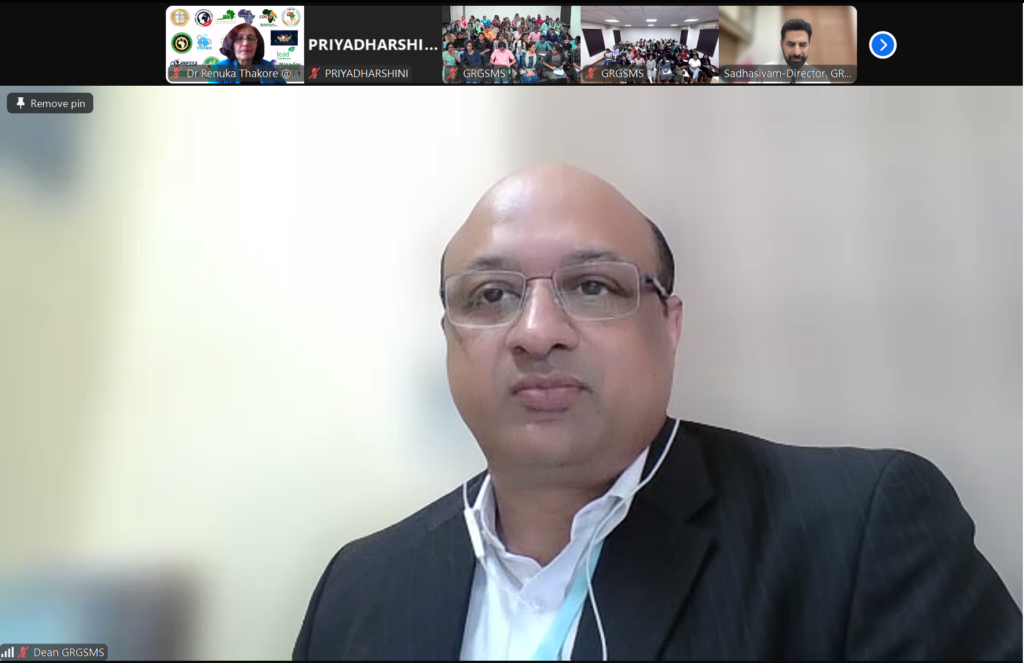
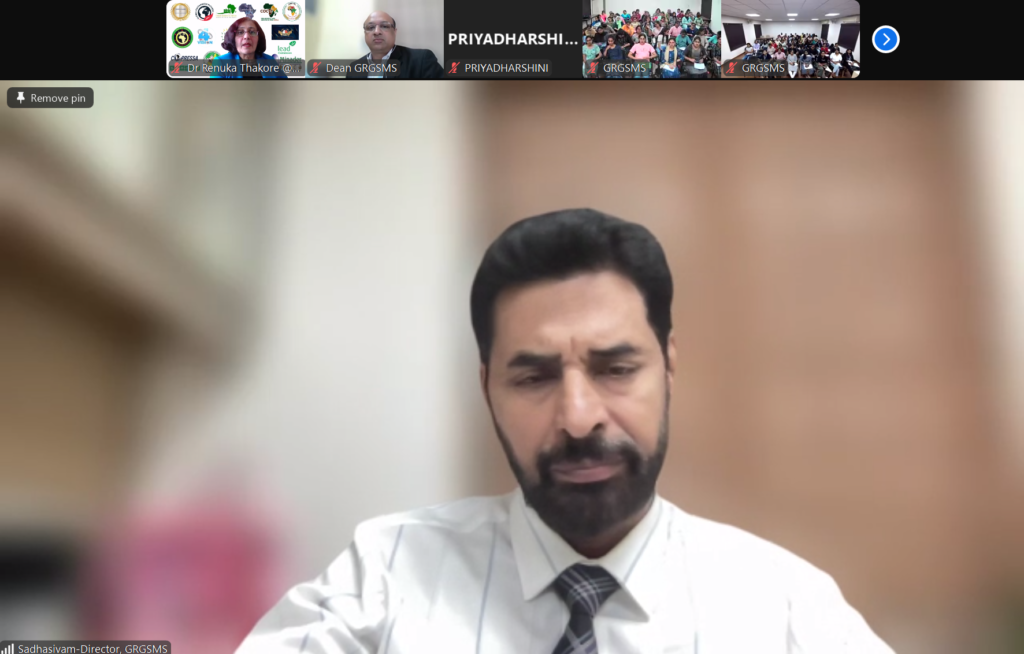
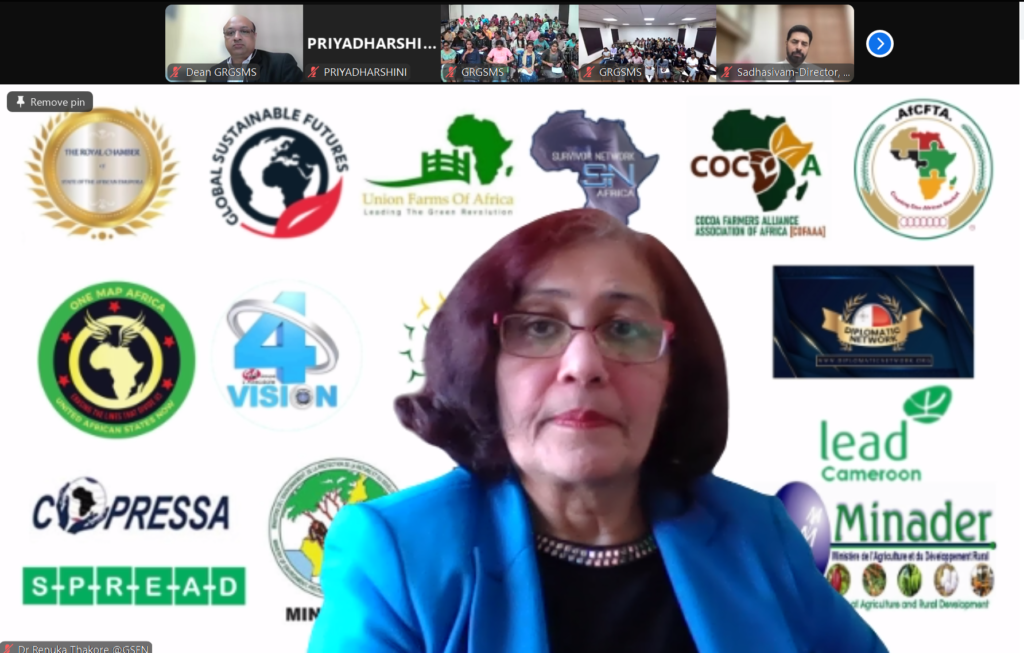
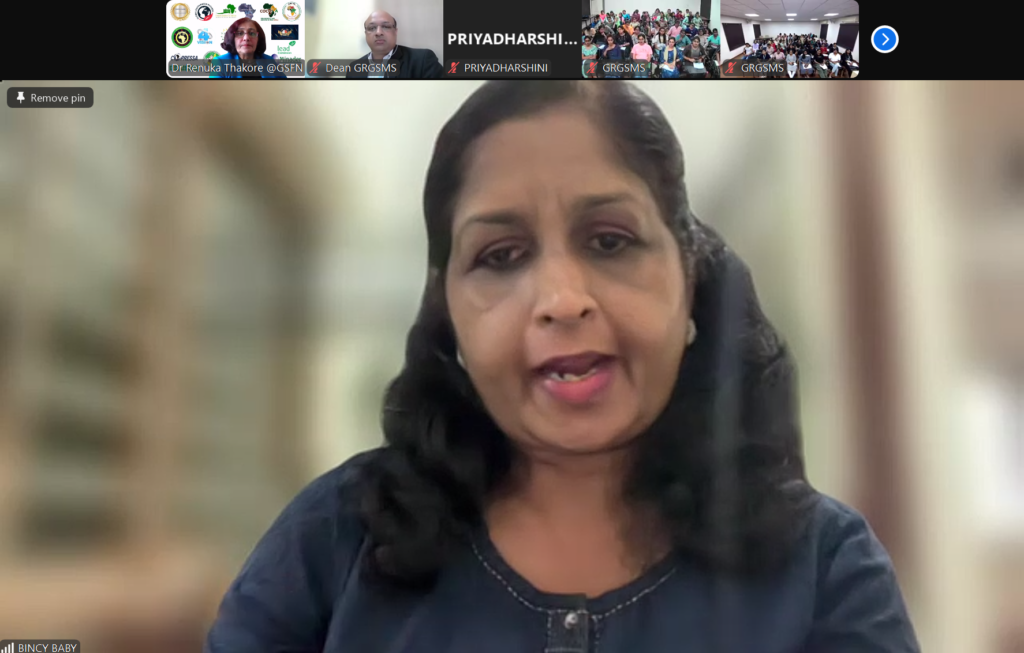
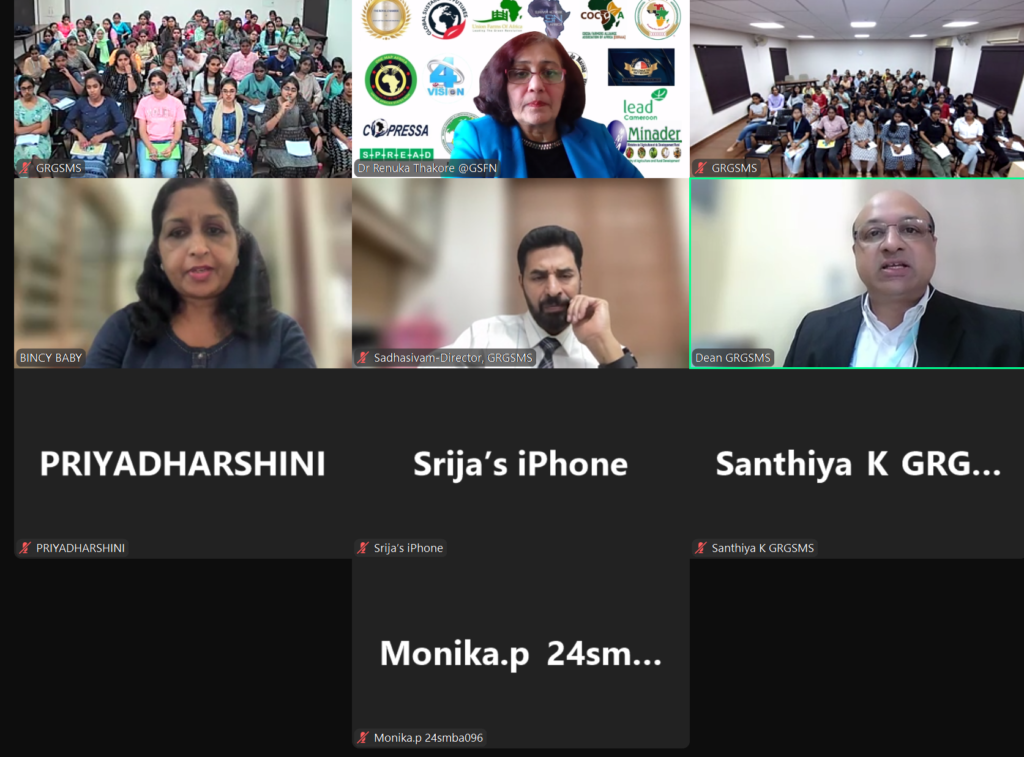
On March 26, 2025, the Global Sustainable Futures Network (GSFN) proudly delivered its first public capacity-building workshop in collaboration with the GRG School of Management Studies (GRGSM), Coimbatore. The workshop focused on Climate Action, Carbon Accounting, and Environmental, Social, and Governance (ESG) initiatives.
The session was led by Dr Renuka Thakore, Founder and CEO of GSFN, who shared her profound expertise on carbon accounting, the growing significance of ESG principles, and the exciting career pathways emerging in this critical field. Dr Thakore emphasized equipping young leaders with the necessary skills and knowledge to drive climate action and sustainability.
The event commenced with an inspiring keynote address by the esteemed Chief Guest, Dr. P. Sadhasivam, Director of GRGSM, who highlighted the urgency of integrating sustainability into education and careers. Accompanied by Dean Dr. Ajith Thomas, faculty members, and an enthusiastic student audience, the session fostered vibrant discussions on the critical role of youth in addressing climate challenges.
A special appreciation goes to Itzserene for coordinating this impactful event. Bincy Baby, Founder and CEO of Itzserene, motivated the students to embed sustainability in their academic pursuits and future careers, reinforcing the need for a values-driven approach to environmental stewardship.
A Milestone for GSFN
This successful workshop marks a significant milestone for GSFN, reinforcing its commitment to empowering communities through training, capacity-building, and climate education. The session was met with overwhelming enthusiasm, reflecting a growing interest among youth in engaging with climate action and ESG principles.
GSFN looks forward to continuing its mission of advancing climate literacy, building local capacities, and fostering a new generation of sustainability champions across the Global South and beyond.
Read more:


Bridging Theory with Practice:
Our initiatives connect academic research with practical applications, ensuring participants can effectively implement their knowledge in real-world scenarios.
Focus on Emerging Technologies and Innovation:
We introduce participants to cutting-edge technologies such as AI, digital tools, and carbon accounting platforms, enabling them to harness innovation for social and environmental impact.
Strengthening Leadership and Advocacy:
Our capacity-building initiatives empower local leaders, women, and youth to become agents of change in their communities, fostering inclusive and sustainable progress.
Customized Learning Paths:
We collaborate with academic institutions, government bodies, and industry partners to develop targeted learning modules that address specific needs such as climate resilience, ESG principles, and sustainable entrepreneurship.
Read More About Our Research Programs